
Wondering if your air fryer is just a mini convection oven? While they share a core cooking principle – circulating hot air – there are key differences. Air fryers excel at crisping and achieving a fried texture with less oil, while convection ovens offer more versatility for baking, roasting, and larger quantities. Understanding these distinctions will help you choose the right appliance for your culinary needs.
Is Air Fryer The Same As Convection Oven? Let’s Find Out!
The kitchen is a place of constant innovation, and two appliances that have taken the culinary world by storm are the air fryer and the convection oven. You might have heard people say an air fryer is just a small convection oven, or perhaps you’ve wondered if you can use your convection oven like an air fryer. It’s a common question, and the answer isn’t a simple yes or no. Both use the power of circulating hot air to cook your food, but they have distinct differences that make them suited for different tasks.
In this guide, we’ll break down the similarities and differences between air fryers and convection ovens. We’ll explore how they work, what makes them unique, and when you should reach for one over the other. By the end, you’ll have a clear understanding of these popular cooking appliances and how to get the most out of them in your kitchen.
Key Takeaways
- Shared Principle: Both air fryers and convection ovens use a fan to circulate hot air, which cooks food faster and more evenly than conventional ovens.
- Key Difference – Size & Speed: Air fryers are typically smaller and heat up much faster due to their compact size and more powerful, focused fan.
- Texture is King: Air fryers are specifically designed to create a crispy, “fried” texture on foods like fries and chicken wings, using less oil.
- Convection Oven Versatility: Convection ovens are larger and more adaptable, capable of baking, roasting, broiling, and handling bigger batches of food.
- Food Placement Matters: In air fryers, food is usually in a single layer in a basket for optimal airflow. Convection ovens allow for multiple rack positions.
- Energy Efficiency: For small portions, an air fryer is generally more energy-efficient than heating up a large convection oven.
- Not Interchangeable for All Tasks: While some recipes can be adapted, neither appliance is a perfect substitute for the other in every situation.
Understanding the Core Cooking Principle: Hot Air Circulation
Before we dive into the differences, let’s talk about what air fryers and convection ovens have in common: the fundamental principle of convection cooking. In a traditional oven, heat radiates from heating elements, and air moves more passively. This can lead to uneven cooking, with hot spots and cooler areas.
Convection cooking changes this. Both convection ovens and air fryers employ a fan. This fan’s job is to actively circulate hot air around the food. This constant movement of hot air does a few important things:
- Faster Cooking: The moving air transfers heat more efficiently to the food’s surface, cooking it quicker than a conventional oven.
- Even Cooking: By constantly swirling the air, hot and cool spots are minimized, leading to more uniform cooking throughout.
- Crispier Results: The continuous flow of hot air helps to dry out the surface of food, which is key for achieving that desirable crispy exterior, especially for items that would typically be deep-fried.
So, the basic technology is similar. But the way this technology is implemented, and the design of the appliances themselves, lead to significant distinctions.
Air Fryer: The Speedy Crisping Champion
An air fryer is essentially a compact, countertop convection oven. Its primary design goal is to mimic the results of deep-frying but with significantly less oil. Think crispy fries, crunchy chicken wings, and golden-brown appetizers. Here’s what sets it apart:
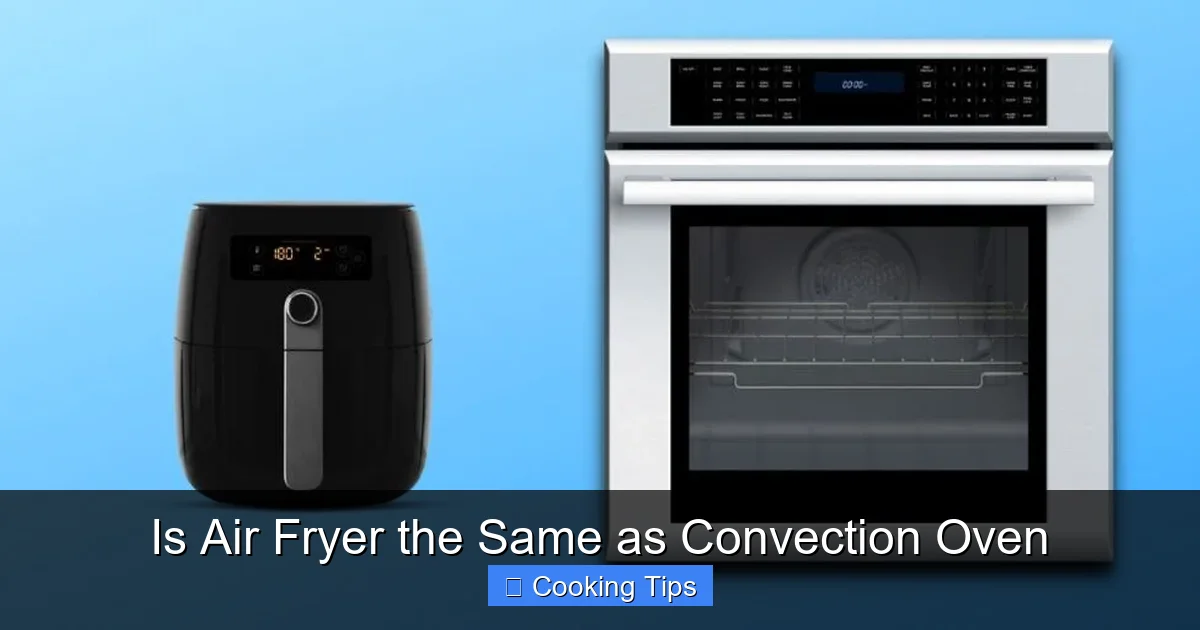
Visual guide about Is Air Fryer the Same as Convection Oven
Image source: ecoenergygeek.com
Design and Size
Air fryers are typically small, often resembling a large pod or a toaster oven. They have a cooking chamber that is relatively small, designed for cooking smaller batches of food. The cooking basket or tray is usually perforated or has holes, allowing air to circulate freely around the food from all sides.
The Fan Factor
The fan in an air fryer is usually more powerful and positioned closer to the heating element and the food. This creates a very intense, rapid circulation of hot air. This high-speed airflow is crucial for achieving that signature crispy texture that air fryers are known for.
Heating Elements
Air fryers typically have a heating element at the top, with the fan positioned directly above it. This forces superheated air downwards and around the food in the basket.
Cooking Capacity
Due to their size, air fryers are best for individuals or small families. You’ll often need to cook items in a single layer to ensure even crisping, meaning you might have to cook in batches for larger meals. However, for quick snacks or side dishes, they are incredibly efficient. You can find great resources on how to cook a variety of items, from waffle fries to quesadillas, all with that perfect crisp.
Best Uses for an Air Fryer:
- Achieving “fried” crispiness on foods like French fries, onion rings, and chicken tenders.
- Reheating leftovers to restore their crispiness (think pizza or fried chicken).
- Cooking smaller portions of proteins and vegetables quickly.
- Roasting small batches of vegetables for a caramelized, tender result.
- Preparing snacks like spring rolls, mozzarella sticks, or crab cakes.
Convection Oven: The Versatile All-Rounder
A convection oven, whether it’s a standalone appliance or a feature within a larger range oven, is a more substantial kitchen appliance. It uses the same hot air circulation principle but on a larger scale and often with more flexibility.
Design and Size
Convection ovens are generally much larger than air fryers. They have multiple rack positions, allowing you to cook different dishes simultaneously or cook larger items. The fan is typically located at the back of the oven, with vents that distribute the hot air throughout the larger cavity.
The Fan Factor
While convection ovens use a fan, it’s often designed for even heat distribution across a larger space rather than the intense, concentrated blast found in an air fryer. This means the results are even and well-cooked, but perhaps not always as intensely “fried” or crispy as a dedicated air fryer can achieve for certain foods.
Heating Elements
Convection ovens usually have heating elements at the top and bottom, in addition to the fan. This provides a more traditional oven-like heating environment, but with the added benefit of convection. Some ovens also have a dedicated convection element behind the fan for more powerful hot air circulation.
Cooking Capacity
This is where convection ovens truly shine. Their larger size and multiple racks make them ideal for cooking for a crowd, baking multiple trays of cookies, or roasting a whole turkey. You can cook a whole roast or several dishes at once. For instance, if you’re planning a large meal, a convection oven is your best bet for efficiently handling all the components.
Best Uses for a Convection Oven:
- Roasting larger cuts of meat like a whole chicken, pork loin, or beef roast.
- Baking multiple batches of cookies, cakes, or pies evenly.
- Cooking dishes that require consistent, even heat over a longer period.
- Broiling or browning the tops of dishes.
- When you need to cook larger quantities of food at once.
- Making larger items like a whole cornish hen or a big batch of vegetables.
Key Differences at a Glance
Let’s summarize the main distinctions:
| Feature | Air Fryer | Convection Oven |
|---|---|---|
| Size | Compact, countertop appliance | Larger, often part of a range or standalone |
| Primary Goal | Crisping, “fried” texture with less oil | Even cooking, versatility (roast, bake, etc.) |
| Air Circulation Intensity | High, rapid, focused | Moderate, even distribution |
| Capacity | Small batches, single layer ideal | Large quantities, multiple racks |
| Heating Elements | Typically top-mounted with fan above | Top and bottom, fan often at rear |
| Preheating Time | Very fast | Moderate to fast, depending on size |
| Energy Efficiency | More efficient for small portions | Less efficient for small portions, better for large batches |
Can You Use Them Interchangeably?
This is where things get a little nuanced. While both use convection, they aren’t perfect substitutes for each other in every scenario.
Using a Convection Oven Like an Air Fryer
Yes, you can often achieve air fryer-like results in a convection oven, especially for smaller items. Many modern convection ovens have an “air fry” setting. If yours doesn’t, you can still use the convection bake or roast setting. For the best results:
- Use a single rack: Place your food on a baking sheet or in a shallow pan on the middle rack. Avoid overcrowding.
- Increase temperature slightly: You might need to increase the recipe temperature by about 25°F (15°C) to compensate for the less intense airflow.
- Adjust cooking time: Keep an eye on your food as it cooks, as it might take slightly longer or shorter than specified for an air fryer.
- Consider an air fryer basket: Some people use specialized perforated pans or air fryer baskets designed to fit inside their convection ovens to improve airflow.
For instance, you could adapt recipes for pork steaks or even pot pies using the convection setting. However, for that ultra-crispy, less-oil texture, a dedicated air fryer often has the edge.
Using an Air Fryer Like a Convection Oven
This is more challenging. While an air fryer will certainly cook and crisp food, its small size and intense airflow are not ideal for baking delicate items like cakes or large roasts.
- Baking: You can bake small cakes or muffins in an air fryer, but you’ll need specific air fryer baking pans or silicone molds. Be aware that the top might brown faster than the inside cooks, and you may need to cover it with foil partway through. You can find guides on how to cook a cake in an air fryer, but it requires adjustments.
- Roasting Large Items: A whole chicken or a large roast will likely not fit, or if it does, the intense airflow might dry out the exterior before the interior is cooked through. For a whole roast, a convection oven is a much better choice.
- Multiple Racks: You cannot cook on multiple levels simultaneously in an air fryer.
So, while you might be able to bake a small biscuit or a small batch of chicken thighs, it’s not a direct swap for the even, spacious cooking environment of a convection oven.
Practical Tips for Using Your Appliances
To get the best results from either appliance, keep these tips in mind:
For Air Fryers:
- Don’t Overcrowd: This is the golden rule. Food needs space for air to circulate. Cook in batches if necessary.
- Shake or Flip: Halfway through cooking, shake the basket or flip your food to ensure even crisping.
- Use a Little Oil: While it uses less oil than deep frying, a light mist or toss with oil will help achieve superior browning and crispiness.
- Clean Regularly: Food debris can affect performance and create smoke.
For Convection Ovens:
- Experiment with Rack Positions: For roasting, the middle rack is often best. For baking, experiment to see what works for your specific oven and recipe.
- Adjust Temps and Times: Recipes written for conventional ovens usually require a lower temperature (about 25°F/15°C lower) or shorter cooking time when using convection.
- Consider the Fan Speed: Some ovens allow you to adjust the fan speed. Lower speeds are often better for delicate baked goods.
- Preheat Properly: Ensure the oven reaches the set temperature before you put food in.
Troubleshooting Common Issues
My Food is Burning on the Outside But Not Cooked Inside (Air Fryer):
Cause: Overcrowding or cooking temperature is too high for the item. The intense airflow is cooking the surface too quickly.
Solution: Cook in smaller batches, reduce the temperature by 10-20°F (5-10°C), and check for doneness more frequently.
My Food Isn’t Crispy Enough (Air Fryer):
Cause: Not enough oil, overcrowding, or cooking time too short.
Solution: Ensure food is in a single layer, toss with a little oil, and increase cooking time or temperature slightly. Make sure the fan is working effectively.
My Baked Goods Aren’t Rising Properly (Convection Oven):
Cause: The circulating air can sometimes interfere with the rise of delicate baked goods.
Solution: Try using the conventional bake setting instead of convection for cakes, soufflés, or anything very delicate. If using convection, ensure your recipe accounts for it, or consider using a slightly lower temperature.
My Roast is Dry (Convection Oven):
Cause: The convection fan can sometimes dry out meats faster than a conventional oven.
Solution: Ensure you are using a recipe designed for convection or adjust your cooking time and temperature. Basting regularly or using a meat thermometer to avoid overcooking is crucial. If you’re cooking bone-in chicken breast, for instance, consider using a slightly lower temperature for longer.
Conclusion: Which One is Right for You?
So, is an air fryer the same as a convection oven? No, not exactly. While they share the fundamental principle of using hot air to cook food, their design, size, and intended use differ significantly.
An air fryer is your go-to for quick, crispy results on smaller portions, mimicking deep-fried textures with minimal oil. It’s perfect for snacks, sides, and reheating. If you’re looking to achieve that satisfying crunch on your fries or wings regularly, an air fryer is a fantastic addition to your kitchen. You can find many great guides on specific foods, like how to cook a frozen burger or even a whole roast, tailored for these appliances.
A convection oven is the workhorse for larger families, baking enthusiasts, and anyone who needs versatility. It excels at roasting, baking, and cooking larger quantities of food evenly. If you have a large family or do a lot of entertaining, a convection oven is essential.
Many kitchens can benefit from having both! The air fryer for those quick, crispy cravings and the convection oven for everything else. Understanding their unique strengths will empower you to make the best choice for your cooking needs and enjoy delicious, perfectly cooked meals every time.