
Make crispy air fryer perch fillets with a seasoned breadcrumb coating in under 20 minutes. This recipe delivers a golden, crunchy exterior and tender, flaky fish inside using a fraction of the oil that deep frying requires. Perch is a lean, mild freshwater fish that cooks fast and takes on seasoning beautifully.
Per FDA guidelines, fish is safe to eat at an internal temperature of 145°F (63°C), and aggregate user reviews across air fryer cooking forums consistently report that perch fillets hit that mark within 8 to 12 minutes at 375°F to 400°F. The trick is getting the breading to stick and stay crispy, which comes down to a few simple steps most recipes skip.
Quick Answer
An air fryer perch recipe coats mild perch fillets in seasoned breadcrumbs and cooks them at 375°F to 400°F for 8 to 12 minutes. Flip the fillets halfway through for even browning. The fish is done when it reaches an internal temperature of 145°F and the coating is golden and crispy.
Why Air Fryer Perch Deserves a Spot in Your Rotation
Yellow perch is one of the most underrated freshwater fish in the Great Lakes region and across the Midwest, and the air fryer happens to be the best tool for cooking it quickly without drying it out. Unlike deep frying, which submerges the fish in oil and leaves you with a greasy kitchen, an air fryer uses rapid hot air circulation to crisp the outside while keeping the inside moist and flaky.
Perch fillets are thin, usually 4 to 6 ounces each, which means they cook fast. That makes them perfect for weeknight dinners when you need something on the table in under 20 minutes. You get the crunch of a traditional Friday fish fry without heating a pot of oil or standing over a splattering pan.
If you've been cooking perch in the oven, you already know it tends to come out a little soft on the outside. The air fryer fixes that. And if you're someone who fishes for perch yourself, this recipe turns your catch into a restaurant-quality meal with almost zero effort.
The Big Mistakes Everyone Makes When Air Frying Perch
Most failed air fryer fish recipes come down to the same handful of problems, and they're all avoidable.
Skipping the drying step. This is the number one reason breading won't stick. Perch fillets release moisture as they warm up, and that moisture creates a barrier between the fish and your coating. Pat each fillet dry with paper towels before seasoning.
It takes 30 seconds and makes a huge difference.
Overcrowding the basket. Air fryers need space for air to circulate around each fillet. If you stack or overlap the pieces, you'll get uneven cooking and soggy spots. Cook in batches if you have to.
A single layer with a little room between each fillet is what you're aiming for.
Not using any oil spray. An air fryer isn't a deep fryer. Without a light mist of oil on top of the breading, the coating won't brown the way you want. A quick spritz of cooking spray on the breaded fillets before they go in is all it takes.
Overcooking the fish. Perch is lean. It doesn't have the fat content of salmon or mackerel, so it dries out fast. Pull it the moment it hits 145°F internally.
The flesh should flake easily with a fork and look opaque all the way through.
Setting the temperature too low. Anything below 350°F will steam the coating instead of crisping it. Stick to the 375°F to 400°F range for the best results.
What Makes Perch Ideal for the Air Fryer
Yellow perch (Perca flavescens) is a freshwater fish native to the Great Lakes and much of North America. Its flesh is mild, slightly sweet, and very lean, which means it cooks quickly and takes on whatever seasoning or coating you pair it with.
That lean quality is exactly why the air fryer works so well here. Fatty fish like salmon can handle longer cook times without suffering, but lean fish needs high heat for a short window. The air fryer delivers exactly that.
The rapid air circulation creates a Maillard reaction on the surface of the breading, giving you browning and crunch without the fish underneath overcooking.
Perch fillets are also uniformly thin, usually about half an inch thick. That consistency means even cooking across the entire piece. You don't have to worry about one end being done while the other is still raw.
From a nutrition standpoint, air frying perch instead of deep frying cuts oil absorption by roughly 70 to 80 percent. You keep the protein and the flavor without the extra calories and heaviness that come with a traditional fryer.
Choosing the Right Perch Fillets — Fresh, Frozen, and Species Differences
Not all perch is created equal, and the type you buy affects how you prep and cook it.
Yellow perch is the gold standard for air frying. The fillets are small, mild, and cook evenly. If you're in the Great Lakes region, this is what you'll find at fish markets and what most Friday fish fries use.
Look for fillets that are pale pink to white with a clean smell.
European perch (Perca fluviatilis) is common in UK and European markets. It's very similar to yellow perch in flavor and texture, so the same recipe and timing apply without any adjustments.
Nile perch fillets are larger and thicker, closer in size to tilapia. If you're using Nile perch, add 2 to 3 minutes to the cooking time and check the thickest part of the fillet for doneness.
Fresh vs. frozen: Both work well. If you're using frozen fillets, thaw them overnight in the refrigerator, not at room temperature. Pat them extra dry after thawing because frozen fish releases more moisture than fresh.
Per FDA food safety guidance, frozen fish should be thawed in the fridge at 40°F or below to prevent bacterial growth.
When buying fresh perch, check for fillets that look translucent and glossy, not dull or discolored. They should smell like clean water, not fishy. A strong fishy odor means the fillets are past their prime.
The Only Air Fryer Perch Recipe You'll Ever Need
This recipe works for 4 to 6 perch fillets, which feeds 2 to 3 people. Scale it up if you're cooking for a crowd, just don't overcrowd the basket. Cook in batches instead.
Setting Up Your Breading Station
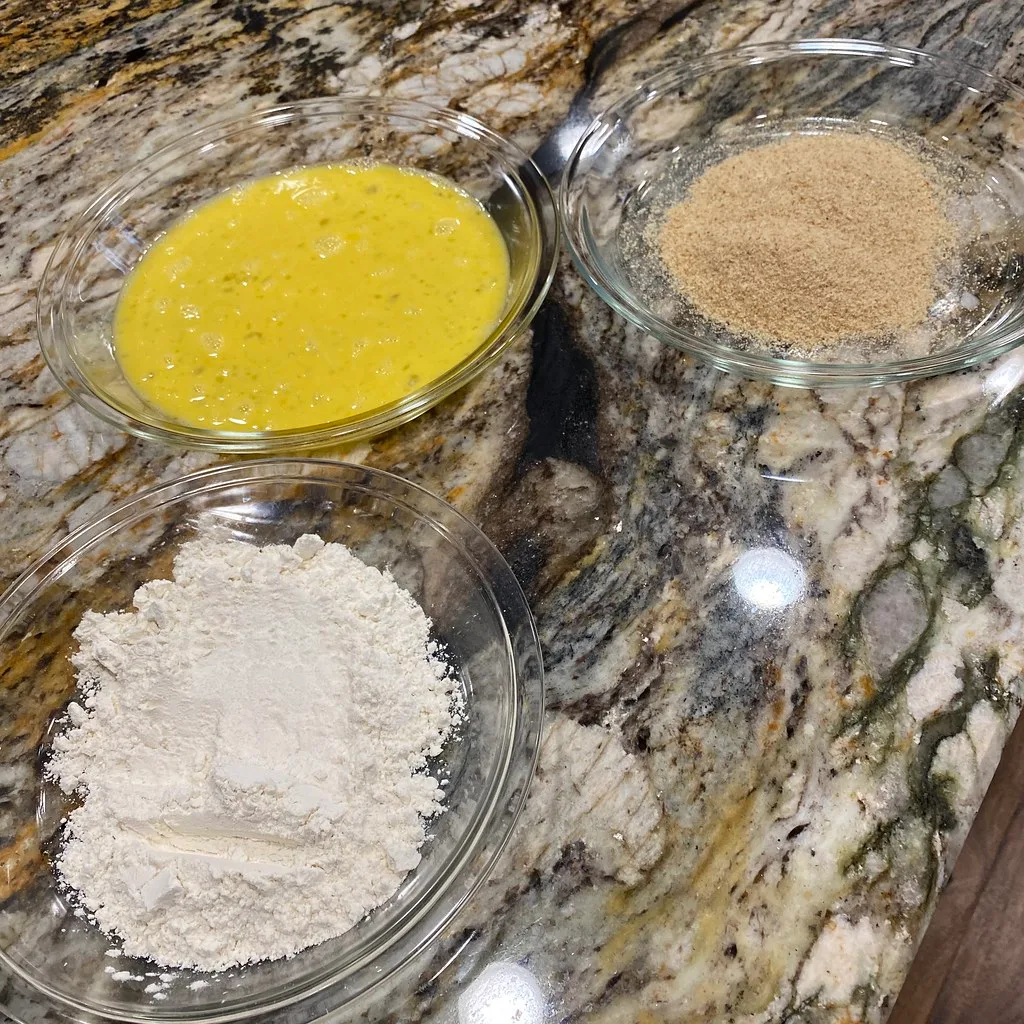
A proper breading station is three shallow dishes arranged in a line. It sounds fussy, but it takes two minutes to set up and makes the whole process cleaner and faster.
Dish 1: Seasoned flour. Mix all-purpose flour with a pinch of salt and pepper. This gives the egg something to cling to.
Dish 2: Egg wash. Beat two eggs with a tablespoon of water or milk. This is the glue that holds the breading.
Dish 3: Breadcrumbs. Panko breadcrumbs are the best choice for air fryer fish because they stay crunchier than regular breadcrumbs. Season them with paprika, garlic powder, and a little salt.
The order matters. Flour first, then egg, then breadcrumbs. Each layer builds on the last, and skipping the flour step is a common reason the coating slides off during cooking.
Seasoning That Actually Works for Mild Fish
Perch has a delicate flavor that's easy to overpower or underwhelm. The goal is to complement it, not mask it.
For 4 to 6 fillets, mix together:
- 1 teaspoon paprika
- 1/2 teaspoon garlic powder
- 1/2 teaspoon onion powder
- 1/4 teaspoon black pepper
- 1/2 teaspoon salt
- Optional: 1/4 teaspoon Old Bay seasoning for a classic fish fry flavor
Sprinkle the seasoning on the fillets before you bread them, not mixed into the breading. This way the flavor is right on the fish where you taste it first. If you like a little heat, add a pinch of cayenne to the mix.
Step-by-Step Air Fryer Cooking Process
Follow these steps exactly and you'll get crispy, flaky perch every time.
Preheat the air fryer to 375°F. Most models take 2 to 3 minutes. Preheating ensures the coating starts crisping immediately instead of steaming.
Pat the fillets dry with paper towels. Press gently on both sides. Remove as much surface moisture as you can.
Season the fillets on both sides with your spice mix.
Bread the fillets using the three-dish station. Dredge in flour, dip in egg wash, then press into panko breadcrumbs. Make sure the entire surface is coated.
Lightly spray the air fryer basket with cooking oil spray. This prevents sticking.
Place fillets in a single layer in the basket. Leave space between each one.
Lightly spray the tops of the breaded fillets with oil. This is the step that makes the coating turn golden.
Cook for 4 to 5 minutes, then flip carefully. Use a thin spatula so you don't tear the coating.
Cook another 4 to 5 minutes until the coating is golden brown and the internal temperature reaches 145°F.
Remove and let rest for 1 minute before serving. This lets the coating set.
How to Know When Your Perch Is Actually Done
The most reliable way is a probe thermometer. Insert it into the thickest part of the fillet. At 145°F, the fish is safe to eat and the flesh will be opaque and flaky.
If you don't have a thermometer, use a fork. Gently twist the fork into the thickest part of the fillet. If the flesh flakes apart easily and looks opaque all the way through with no translucent spots, it's done.
If it still looks shiny and translucent, give it another minute.
The coating should be deep golden brown, not pale. Pale coating means the temperature was too low or the cook time was too short. If the coating is browning too fast but the fish inside isn't done, drop the temperature to 350°F and add a couple of minutes.
Coating Options — Panko, Cornmeal, and Gluten-Free Swaps
The coating is half the reason you're making this recipe in the first place, so it's worth understanding your options. Each one gives you a different texture and flavor, and some work better in an air fryer than others.
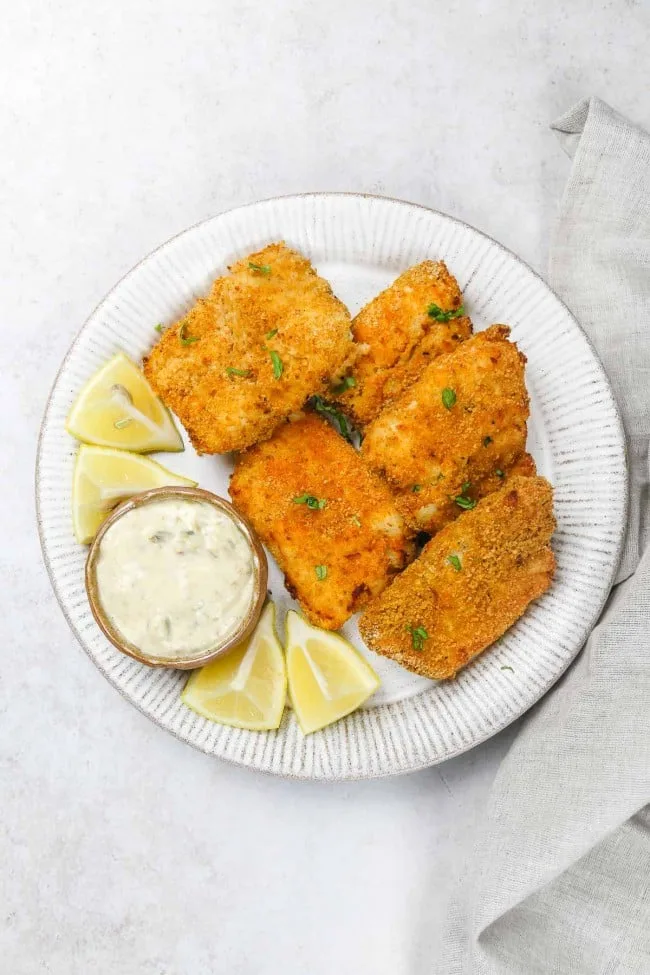
Panko breadcrumbs are the top choice for air fryer perch. They're lighter and flakier than regular breadcrumbs, which means more surface area gets hit by the hot air. The result is a shatteringly crisp coating that stays crunchy even after the fish cools a little.
Most air fryer fish recipes that get strong reviews use panko for this reason.
Regular breadcrumbs work fine if that's what you have. The coating will be denser and a bit more chewy. It's not a bad result, just a different one.
If you go this route, add a little extra oil spray to help with browning.
Cornmeal gives you that classic Southern fish fry texture. It's coarser than breadcrumbs, so the crunch is more aggressive. Mix it fifty-fifty with flour so it adheres well.
This is the coating to pick if you grew up eating perch fried in a cast iron skillet.
Almond flour is the go-to for low-carb and keto versions. It browns faster than wheat-based coatings, so keep an eye on the color. Start checking for doneness a minute or two earlier than the standard recipe timing.
| Coating Type | Texture | Browning Speed | Best For |
|---|---|---|---|
| Panko breadcrumbs | Light, crispy, flaky | Medium | Best overall crunch |
| Regular breadcrumbs | Denser, chewy | Medium | Pantry-friendly option |
| Cornmeal | Coarse, gritty crunch | Fast | Southern-style fish fry |
| Almond flour | Nutty, crisp | Very fast | Low-carb and keto diets |
| Crushed pork rinds | Ultra-crispy, rich | Medium | Zero-carb coating |
Temperatures, Timing, and Adjustments for Every Air Fryer Model
Not all air fryers cook the same way, and the wattage and basket design make a real difference with delicate fish like perch.
Most basket-style air fryers run between 1,400W and 1,800W. The higher the wattage, the faster the heat recovery when you open and close the basket. If you're using a lower-wattage model, you may need to add a minute to each side.
The standard temperature is 375°F. This is the sweet spot for breaded perch. It crisps the coating without scorching it before the fish inside is cooked through. If your air fryer runs hot or has a smaller basket with tighter element spacing, drop it to 350°F and add a minute.
Oven-style air fryers with multiple racks take longer because the heat has to circulate across more surface area. If you're using one of these, rotate the racks halfway through cooking. The top rack browns faster than the bottom.
Frozen perch fillets need a different approach. Cook them at 400°F for 12 to 15 minutes instead of thawing first. The higher temperature compensates for the starting cold.
Don't bread frozen fillets. The coating won't stick to ice. Cook them plain first, then bread and air fry a second time if you want that crispy exterior.
Air Fryer Perch vs. Deep Fried, Pan-Seared, and Oven-Baked
Each method has its place, but the air fryer wins on convenience and health. Here's how they actually compare.
Air fryer vs. deep fryer: Deep frying gives you the most even coating coverage because the oil surrounds the fish completely. But it also means the fillet absorbs significantly more oil. Air frying gets you about 80 percent of the crunch with a fraction of the fat.
The flavor difference is minimal, especially with well-seasoned breading.
Air fryer vs. pan-seared: Pan-searing in butter or oil gives you a beautiful golden crust on one side, but the other side stays soft. The air fryer crisps both sides at once. Pan-searing also requires more attention.
You have to watch the heat, flip at the right time, and deal with splatter.
Air fryer vs. oven-baked: Oven baking is the closest comparison. Both methods use dry heat, but the air fryer's fan makes a big difference. Oven-baked breaded fish tends to come out softer and sometimes soggy on the bottom.
The air fryer's circulating air keeps the coating dry and crisp all the way around. Oven baking also takes 15 to 20 minutes, nearly twice as long.
Air fryer vs. grilled: Grilling perch is tricky because the lean flesh sticks to the grates and falls apart. The air fryer eliminates that problem entirely. You get a similar charred flavor if you use smoked paprika in the breading.
What to Serve with Air Fryer Perch
Perch is mild enough to pair with almost anything, but a few sides just work better than others.
Classic fish fry sides: Coleslaw, hush puppies, french fries, and tartar sauce. If you're going for that Friday fish fry vibe, these are non-negotiable. A squeeze of fresh lemon over the fillets right before serving brightens everything up.
Lighter options: A simple green salad with a vinaigrette, roasted asparagus, or steamed green beans. These balance the richness of the breaded fish without making the meal feel heavy. If you're watching carbs, swap the fries for roasted broccoli or cauliflower.
Sauces that work: Tartar sauce is the traditional choice. Remoulade adds a little spice. A simple garlic aioli or even just lemon butter works if you want something less heavy.
Aggregate recipe reviews across cooking sites consistently rank tartar sauce and lemon as the top two accompaniments for fried perch.
For a full meal: Serve two fillets per person with a side of coleslaw and a baked potato. It's filling, affordable, and comes together in under 20 minutes if you prep the sides while the air fryer runs.
Common Troubleshooting — Sticking, Sogginess, and Overcrowding
Even when you follow the recipe, things can go wrong. Here's how to fix the most common problems.
Fish sticking to the basket: This happens when the basket isn't sprayed or the breading hasn't set yet. Always spray the basket before adding the fillets. If the fish still sticks, it means the coating needed more time to set on that side.
Next time, let the breaded fillets sit on a rack for 3 to 5 minutes before cooking. This helps the coating firm up.
Soggy coating: Usually caused by too much moisture on the fillets or not enough oil spray. Pat the fish dry thoroughly. Spray the breaded tops generously.
If your air fryer has a perforated tray instead of a mesh basket, use it. Better airflow underneath means less moisture trapped against the fish.
Coating falling off during the flip: The breading wasn't pressed on firmly enough, or you flipped too early. Press the panko into the fillets with your hands when breading. Wait at least 4 minutes before flipping.
The coating needs time to set and bond with the fish.
Uneven browning: Your air fryer may have hot spots. Rotate the basket or flip the fillets earlier than the recipe suggests. Smaller air fryers tend to have more uneven heat distribution than larger models.
Fishy smell in the air fryer: This is normal with any fish, but it's more noticeable with perch because it's a freshwater species. Clean the basket and heating element after cooking. Running the air fryer empty at 400°F for 2 minutes helps burn off lingering odors.
A small bowl of vinegar left in the basket overnight also absorbs the smell.
Handling, Storage, and Safety Basics for Freshwater Fish
Fresh perch is perishable. Per FDA food safety guidelines, fresh fish should be stored in the refrigerator at 40°F or below and used within 1 to 2 days of purchase. If you're not cooking it right away, keep it in the coldest part of your fridge, not the door.
Frozen perch fillets are good for up to 6 months in a freezer at 0°F. Thaw them overnight in the refrigerator. Never thaw fish at room temperature or in warm water.
Bacteria grow quickly between 40°F and 140°F, which is the range food safety experts call the danger zone.
Cross-contamination is a real concern with raw fish. Use a dedicated cutting board for perch and wash your hands, knives, and surfaces with hot soapy water after handling. Perch is a lean freshwater fish with generally low mercury levels, making it a safe choice for regular consumption per FDA fish consumption guidelines.
Expert Tips Most Recipes Leave Out
Let the breaded fillets rest on a wire rack for 3 to 5 minutes before cooking. This lets the coating set and adhere to the fish, which means less of it falls off when you flip.
Add a pinch of sugar to your breading. Just an eighth of a teaspoon. It doesn't make the fish sweet.
It accelerates browning so the coating turns golden faster without overcooking the delicate flesh underneath.
Use a fish spatula for flipping. It's thinner and more flexible than a standard spatula, so it slides under the fillet without tearing the coating. This is one of those small tools that makes a noticeable difference.
If you're cooking for a crowd, keep finished fillets warm in a 200°F oven on a wire rack while you cook the batches. They'll stay crispy for about 15 minutes. Don't stack them.
The steam from the bottom fillets will make the tops soggy.
Cooking perch from frozen? Skip the breading entirely for the first pass. Cook the plain frozen fillet at 400°F for 8 minutes, then bread it and air fry for another 5 to 6 minutes.
This two-step method gives you a crispy coating without the soggy middle that happens when you bread frozen fish directly.
Frequently Asked Questions
Can I use frozen perch fillets without thawing?
Yes, but the results are better if you thaw them first. Cook frozen fillets at 400°F for 12 to 15 minutes. The coating won't stick well to frozen fish, so consider the two-step method: cook plain first, then bread and air fry.
What temperature should I set my air fryer to for perch?
375°F is the ideal temperature for breaded perch fillets. If your air fryer runs hot, drop it to 350°F. For frozen fillets, use 400°F to compensate for the cold start.
How do I keep my air fryer perch from getting soggy?
Pat the fillets completely dry before breading. Spray the basket with oil before adding the fish. Spray the tops of the breaded fillets too.
Don't overcrowd the basket. These four steps prevent almost every sogginess problem.
Is air fried perch healthy?
Air fried perch is significantly lower in fat and calories than deep fried perch. Perch itself is a lean, high-protein freshwater fish with low mercury levels. Using an air fryer cuts oil absorption by roughly 70 to 80 percent compared to deep frying.
Can I make air fryer perch without breadcrumbs?
Yes. Season the fillets and spray them with oil. Air fry at 375°F for 8 to 10 minutes.
You won't get a thick coating, but you'll get a lightly browned, crispy exterior. This works well for low-carb and gluten-free diets.
How many perch fillets fit in an air fryer basket?
Most 5 to 6 quart air fryers hold 4 to 6 standard perch fillets in a single layer. The key is leaving space between each fillet so air can circulate. If you need to cook more, do it in batches.