
An air fryer salmon bowl recipe gives you crispy, restaurant-quality salmon with perfectly cooked toppings in under 20 minutes, no oven or stovetop juggling required. It's the kind of meal that looks like you spent way more time on it than you actually did. The air fryer circulates hot air around the fillet at 400°F, giving you that golden, crackling skin while keeping the inside moist and flaky, something a standard oven struggles to replicate.
What makes this recipe work so well is the speed and hands-off nature of the method. Per USDA guidelines, salmon is safe to eat at an internal temperature of 145°F, and most air fryer models hit that mark in 8 to 12 minutes for a 1-inch fillet. That's faster than preheating an oven, and you get better texture to boot.
Let's break down exactly how to nail this bowl every time.
Image source: Bing (Web (fair-use with source credit))
Quick Answer
An air fryer salmon bowl recipe combines crispy air-fried salmon with a grain base, fresh vegetables, and a drizzled sauce. Season a 6-ounce salmon fillet, air fry at 400°F for 8 to 12 minutes until it reaches 145°F internally, then assemble over rice or quinoa with your favorite toppings. The whole process takes under 25 minutes from prep to plate.
Why Air Fryer Salmon Bowls Are the Weeknight Dinner You Didn't Know You Needed
The air fryer salmon bowl has quietly become one of the most practical weeknight meals you can make, and once you try it, you'll understand why. It checks every box: fast, healthy, customizable, and genuinely delicious. You get the satisfaction of a composed bowl meal without the usual cleanup of three different pans and a sheet tray.
Here's what makes this format so effective. The air fryer handles the protein and most of the vegetables at the same time, meaning your hands are free to prep the grain base and whisk together a sauce. Most air fryer salmon bowl recipes call for a cook time of 8 to 14 minutes depending on fillet thickness, which is roughly half the time of oven baking.
The circulating hot air creates a Maillard reaction on the salmon surface that gives you crispy skin and a lightly caramelized exterior, something that's hard to achieve in a standard oven without broiling.
The bowl format also solves the "what's for dinner" problem for families with different preferences. One person gets spicy mayo, another gets a soy-ginger drizzle, someone else skips the grain for cauliflower rice. Everyone eats the same base meal but customizes their own bowl.
It's the kind of flexible cooking that makes weeknight planning actually sustainable.
If you're working with a larger air fryer, like a 9 qt model for big families, you can cook multiple fillets at once without overcrowding, which is the single biggest factor in getting crispy rather than steamed salmon.
What Makes Air Fryer Salmon Different From Every Other Cooking Method
Air fryer salmon produces a texture that oven baking and stovetop pan-searing simply can't match in the same time frame. The key is the concentrated, circulating hot air that hits the fillet from all directions simultaneously. An oven heats from one direction (usually top or bottom elements), and a pan only contacts the bottom surface.
The air fryer wraps the salmon in heat, which means the skin crisps evenly and the flesh cooks through without you having to flip or babysit it.
Here's a quick comparison of the most common salmon cooking methods:
| Method | Cook Time (1-inch fillet) | Skin Crispiness | Hands-Off Factor | Best For |
|---|---|---|---|---|
| Air fryer (400°F) | 8–12 minutes | Excellent | High | Weeknight speed and texture |
| Oven bake (425°F) | 14–18 minutes | Moderate | High | Cooking multiple fillets |
| Pan-sear (medium-high) | 6–8 minutes | Very good (one side) | Low | Restaurant-style presentation |
| Grill (medium-high) | 8–10 minutes | Good | Medium | Smoky flavor |
| Poach (simmering liquid) | 10–12 minutes | None | Medium | Delicate, moist texture |
The air fryer wins on the combination of speed and texture. Pan-searing gives you incredible crust on one side but requires attention and leaves the top underdone unless you finish it in the oven. Grilling adds flavor but is weather-dependent and harder to control.
Poaching is gentle but gives you zero browning.
One thing the air fryer does differently is retain moisture. The enclosed cooking environment means less moisture escapes compared to an open oven or grill. Aggregate user reviews across major air fryer brands consistently report that salmon comes out more forgiving in an air fryer than in a conventional oven, where it's easier to accidentally dry out the fillet.
The trade-off is capacity. Most standard air fryer baskets fit 2 to 3 fillets in a single layer without overlapping. If you're cooking for a crowd, you'll need to work in batches or use a larger model.
For a family of four, though, it's usually one round.
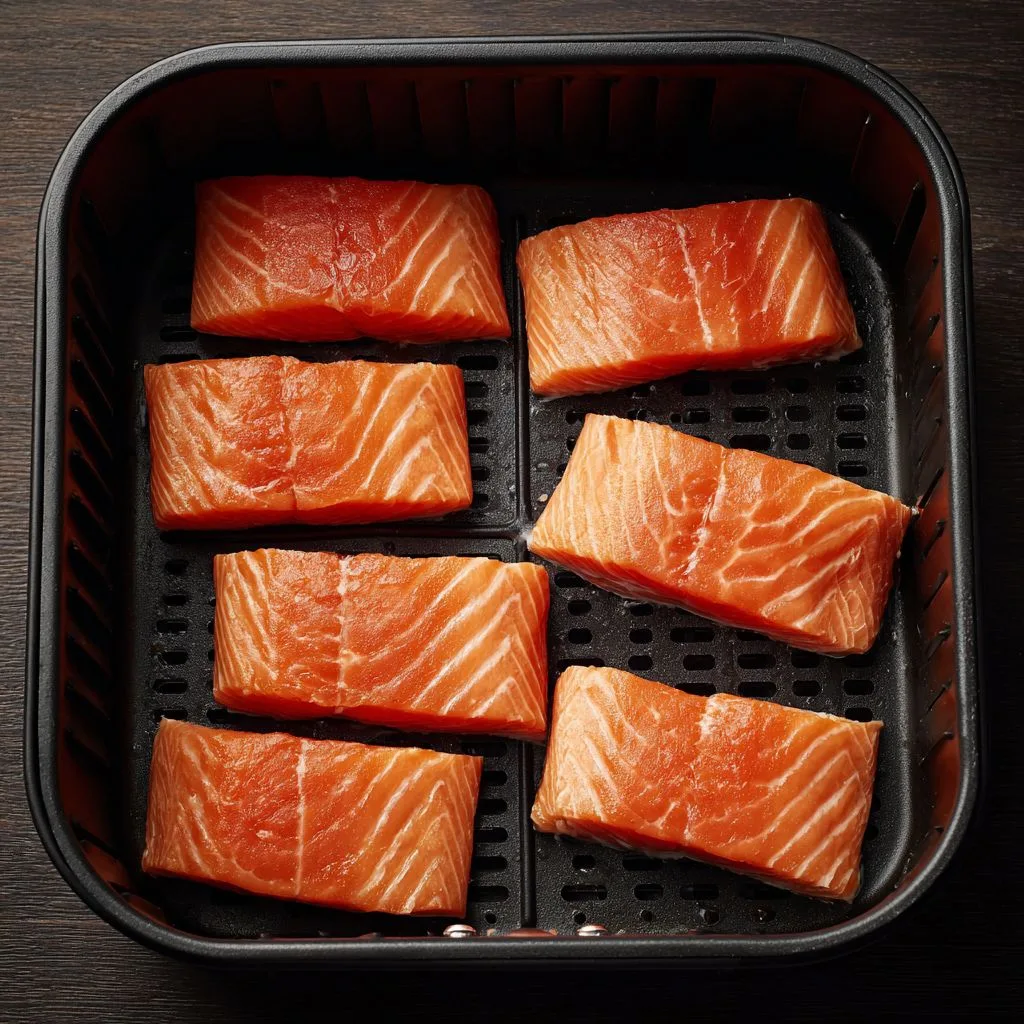
Image source: Bing (Web (fair-use with source credit))
The Best Salmon for Your Bowl: Why It Actually Matters
Not all salmon behaves the same in an air fryer, and choosing the right type makes a real difference in the final bowl. The two main decisions are species and whether to go skin-on or skinless.
Atlantic salmon (Salmo salar) is the most widely available option in US and UK supermarkets. It's typically farm-raised, has a higher fat content, and a milder flavor. The extra fat makes it more forgiving in the air fryer, which is great if you're new to this method.
A 6-ounce Atlantic fillet contains roughly 350 calories and about 40 grams of protein.
Wild-caught salmon species like sockeye (Oncorhynchus nerka) and coho (Oncorhynchus kisutch) have a deeper, more pronounced flavor and leaner flesh. Sockeye in particular has that vibrant red color and rich taste that stands up well to bold sauces like teriyaki or spicy mayo. The leaner profile means it cooks slightly faster, so shave a minute or two off your cook time.
Pink salmon (Oncorhynchus gorbuscha) is the most affordable wild option but has the softest texture and mildest flavor. It works in a bowl but can fall apart more easily when flaked.
For air fryer cooking specifically, skin-on fillets are strongly recommended. The skin acts as a protective layer that prevents the flesh from drying out, and it crisps up beautifully in the circulating air. Skinless fillets work but require a light coating of oil to prevent sticking and drying.
When shopping, look for fillets that are uniform in thickness. A fillet that's 1.5 inches thick on one end and 0.5 inches on the other will cook unevenly. If you end up with an uneven piece, tuck the thin tail end under itself to create a more even profile, or simply cut it into two pieces and cook them separately.
Frozen salmon works too. Thaw it overnight in the refrigerator or submerge the sealed fillet in cold water for 30 to 60 minutes. Pat it thoroughly dry with paper towels before seasoning, since excess surface moisture is the enemy of crispy skin.
Image source: Bing (Web (fair-use with source credit))
Everything You Need: Ingredients, Tools, and Pantry Staples
One of the best things about an air fryer salmon bowl is that it doesn't require a long shopping list. Most of these ingredients are pantry staples or easy to find at any grocery store.
For the salmon:
- 2 skin-on salmon fillets (6 ounces each, about 1 inch thick)
- 1 tablespoon avocado oil or olive oil
- Salt and black pepper
- Optional: garlic powder, smoked paprika, or everything bagel seasoning
For the grain base:
- 2 cups cooked jasmine rice, sushi rice, or quinoa (about 1 cup uncooked)
- For a low-carb option, use cauliflower rice
For the toppings (pick 3 to 5):
- 1 avocado, sliced
- 1 cup shelled edamame (thawed if frozen)
- 1/2 cucumber, thinly sliced
- 1/2 cup shredded red cabbage
- 1/4 cup shredded carrots
- Pickled ginger
- 1/4 cup corn kernels (fresh or canned)
For the sauce (choose one):
- Soy-ginger: 3 tablespoons soy sauce (or tamari for gluten-free) + 1 tablespoon rice vinegar + 1 teaspoon sesame oil + 1 teaspoon fresh grated ginger + 1 teaspoon honey
- Spicy mayo: 3 tablespoons mayonnaise + 1 tablespoon sriracha + 1 teaspoon lime juice
- Teriyaki: 2 tablespoons soy sauce + 1 tablespoon mirin + 1 teaspoon honey + 1/2 teaspoon cornstarch (heated until thickened)
For garnish:
- Sesame seeds
- Sliced green onion
- Nori strips
- Lime wedge
Tools you'll need:
- Air fryer (any standard basket or oven-style model works)
- Instant-read food thermometer
- Small whisk or fork for the sauce
- Paper towels (for patting the salmon dry)
If you're using an Instant Vortex air fryer, the preheat function is worth using. It takes about 3 minutes and ensures the basket is at full temperature when the salmon goes in, which improves skin crispiness.
Image source: Bing (Web (fair-use with source credit))
How to Cook Perfect Air Fryer Salmon Every Single Time
This is where the magic happens, and it's simpler than you think. The entire cook process takes under 15 minutes once the air fryer is preheated.
Step 1: Prep the salmon.
Pat each fillet completely dry with paper towels. This is non-negotiable. Moisture on the surface will steam the skin instead of crisping it.
Season both sides with salt, pepper, and any additional spices you like. A light, even coating of avocado oil on the skin side helps with browning.
Step 2: Preheat the air fryer.
Set it to 400°F (205°C) and let it run for 3 minutes. Preheating matters because it means the salmon hits full heat immediately, which jumpstarts the crisping process. If your model doesn't have a preheat function, just run it empty for 3 minutes at temperature.
Step 3: Place the salmon in the basket.
Lay the fillets skin-side down in a single layer with at least 1 inch of space between them. Overcrowding is the most common mistake. When fillets touch or overlap, they trap steam and you end up with rubbery, pale skin instead of crispy, golden skin.
If your basket is small, cook in two batches.
Step 4: Cook.
Air fry at 400°F for 8 to 12 minutes. The exact time depends on fillet thickness:
- 3/4 inch thick: 7 to 9 minutes
- 1 inch thick: 9 to 11 minutes
- 1.25 inches or thicker: 11 to 14 minutes
Don't flip the salmon. The air fryer circulates heat from above, so the top cooks perfectly while the skin crisps on the bottom.
Step 5: Check for doneness.
The USDA and FDA recommend a minimum internal temperature of 145°F (63°C) for fish. Insert an instant-read thermometer into the thickest part of the fillet. The flesh should be opaque pink throughout and flake easily with a fork.
If it still looks translucent in the center, add 1 to 2 minutes.
Step 6: Rest.
Let the salmon sit for 2 to 3 minutes after cooking. This allows the residual heat to finish cooking the center and lets the juices redistribute. Cutting into it immediately releases moisture and can make the texture seem dry.
Pro tip: If you want extra-crispy skin, lightly mist the skin side with oil right before cooking. The fine oil droplets create more surface area for browning. Don't use a heavy pour of oil, though, as excess oil can smoke and leave a bitter taste.
While the salmon cooks, this is your window to warm the rice, slice the vegetables, and whisk the sauce. Everything comes together in the same 10-minute window, which is exactly why this recipe works so well for busy nights.
Image source: Bing (Web (fair-use with source credit))
The Sauce That Makes or Breaks Your Bowl
A great salmon bowl lives and dies by the sauce. The right drizzle ties the crispy fish, the grain base, and the fresh vegetables into something that feels intentional rather than thrown together. Get it wrong, and you've got a soggy bowl with competing flavors that don't go anywhere.
The soy-ginger sauce is the most versatile starting point. It's light enough not to overpower the salmon, and the acidity from the rice vinegar cuts through the richness of the fish. Whisk together 3 tablespoons soy sauce (or tamari if you need gluten-free), 1 tablespoon rice vinegar, 1 teaspoon sesame oil, 1 teaspoon freshly grated ginger, and 1 teaspoon honey.
That's it. Takes about 90 seconds.
If you want something with more heat, the spicy mayo route is hard to beat. Mix 3 tablespoons mayonnaise with 1 tablespoon sriracha and 1 teaspoon lime juice. The fat in the mayo carries the capsaicin from the sriracha, which means the heat builds gradually instead of hitting all at once.
Add more sriracha if you like it aggressive, or back it off to half a tablespoon for a gentle warmth.
For a teriyaki-style glaze, combine 2 tablespoons soy sauce, 1 tablespoon mirin, 1 teaspoon honey, and half a teaspoon of cornstarch. Heat it in a small saucepan over medium heat, stirring constantly, until it thickens enough to coat the back of a spoon. This takes about 3 minutes.
The cornstarch is what gives it that glossy, clingy texture that sticks to the salmon instead of pooling at the bottom of the bowl.
The key rule: drizzle the sauce over the assembled bowl right before eating. If you sauce the bowl too early, the liquid soaks into the rice and softens the crispy salmon skin. You lose the textural contrast that makes this meal work.
Image source: Wikimedia Commons / NeoBatfreak (CC BY-SA)
Building Your Bowl: Assembly Order, Toppings, and Pro Tips
How you stack the bowl matters more than most people realize. The wrong order turns everything lukewarm and mushy. The right order keeps each component doing its job.
Start with the grain base. Spread 1 cup of cooked rice or quinoa across the bottom of a wide, shallow bowl. A wide bowl gives you surface area to arrange toppings in sections rather than piling everything on top of each other.
That presentation isn't just for looks, it lets you control each bite.
Next, arrange the vegetables around the edges. Place cucumber slices, shredded cabbage, edamame, and avocado in distinct sections on top of and around the rice. Keeping them separate means you get a little of everything in each forkful instead of one bite that's all cabbage and the next that's all avocado.
Set the salmon in the center, either whole or broken into large flakes. If the skin separated during cooking, lay it alongside the fillet like a crispy chip. That skin is the best part, and it deserves a spot where you can actually taste it.
Drizzle the sauce in a zigzag pattern over everything. Finish with sesame seeds, sliced green onion, and a lime wedge on the side. The lime is important.
A quick squeeze right before eating brightens the whole dish and balances the richness of the salmon and sauce.
One pro tip that makes a noticeable difference: warm your rice before assembling. Cold, day-old rice from the fridge works fine if you microwave it for 60 to 90 seconds with a damp paper towel over the top. Hot rice against crispy salmon against cool vegetables is the temperature contrast that makes this bowl feel like something from a restaurant.
If you're meal prepping, store the components separately and assemble fresh. Cooked salmon keeps for 3 to 4 days refrigerated in an airtight container. Reheat it in the air fryer at 350°F for 3 to 4 minutes to bring back some of the crispiness.
Cold salmon on a bowl isn't terrible, but warm salmon on a bowl is significantly better.
Image source: Bing (Web (fair-use with source credit))
Customizing Your Bowl: 5 Flavor Variations to Try
Once you've got the base recipe down, the bowl format is endlessly adaptable. Here are five variations that each take the meal in a completely different direction.
1. Korean-Inspired Gochujang Bowl
Swap the soy-ginger sauce for a gochujang glaze: 1 tablespoon gochujang paste, 1 tablespoon soy sauce, 1 teaspoon sesame oil, 1 teaspoon rice vinegar, and 1 teaspoon honey. Top with quick-pickled cucumbers (sliced cucumber tossed with rice vinegar and sugar for 10 minutes), kimchi, and a soft-boiled egg. The fermented heat from the gochujang and kimchi plays perfectly against the rich salmon.
2. Mediterranean Bowl
Season the salmon with dried oregano, lemon zest, and garlic powder instead of Asian-inspired spices. Use a lemon-herb tahini sauce: 2 tablespoons tahini, 1 tablespoon lemon juice, 1 tablespoon water, and a pinch of salt. Top with cherry tomatoes, diced cucumber, red onion, and crumbled feta.
This version leans fresh and tangy.
3. Mexican-Style Bowl
Season the salmon with cumin, chili powder, and a squeeze of lime. Use a chipotle crema: 2 tablespoons sour cream mixed with 1 teaspoon adobo sauce from a can of chipotles. Top with black beans, corn, diced avocado, and a handful of crushed tortilla chips for crunch.
Add pickled red onion if you have it.
4. Hawaiian Poke-Style Bowl (Cooked)
This bridges the gap between a traditional poke bowl and a cooked salmon bowl. Use sushi rice seasoned with rice vinegar and a pinch of sugar. Top with macadamia nuts, diced mango, edamame, and a drizzle of shoyu sauce (soy sauce with a little mirin and dashi).
The sweet mango against the savory salmon is a combination that works better than it sounds.
5. Green Power Bowl
Swap the grain for a mix of baby spinach and arugula. Keep the soy-ginger sauce but add half an avocado mashed directly into the greens as a base layer. Top with air-fried salmon, steamed broccoli, hemp seeds, and a sprinkle of furikake.
This is the version you make when you want the bowl to feel like a salad but still satisfy like a real meal.
Each of these uses the same air fryer salmon method. Only the seasoning, sauce, and toppings change. That's the beauty of the format.
Master the protein once and you've got a different dinner every night of the week.
Meal Prep Strategy: Make 4 Bowls in Under 45 Minutes
If you're cooking for the week, this recipe scales beautifully. The trick is prepping components in parallel rather than sequentially.
Start by cooking the grain base. Whether it's rice or quinoa, get it going first since it takes the longest, usually 15 to 18 minutes of passive cook time. While that's happening, prep all your vegetables.
Slice the cucumber, shred the cabbage, cube the avocado (toss it with lime juice to prevent browning), and thaw the edamame.
Make the sauce next. Whichever variation you choose, it takes under 2 minutes to mix. Store it in a small jar or container in the fridge.
It'll keep for up to 5 days.
Now cook the salmon. If your air fryer basket fits 4 fillets without crowding, do them all at once. If not, two batches of 2 fillets adds about 10 minutes.
Let the cooked salmon cool for 5 minutes before portioning it into containers.
Store everything in separate containers: one for the grain, one for the vegetables, one for the salmon, and the sauce in its own small jar. This keeps the textures intact. If you combine everything while it's hot, the vegetables wilt and the salmon skin goes soft.
When you're ready to eat, reheat the salmon in the air fryer at 350°F for 3 to 4 minutes. Warm the rice in the microwave for 60 to 90 seconds. Assemble the bowl cold, add the hot components, and drizzle the sauce.
Total reassembly time is about 5 minutes.
For larger batch cooking, an 8 qt air fryer with dual basket lets you cook salmon in one basket and roast vegetables in the other simultaneously. That cuts your active cook time roughly in half.
Common Mistakes That Ruin Air Fryer Salmon (And How to Avoid Them)
Even a simple recipe has pitfalls. These are the errors that show up most often in user reviews and recipe comments, and they're all easy to fix once you know to look for them.
Not patting the salmon dry. Surface moisture is the number one enemy of crispy skin. Water on the fillet creates steam in the air fryer basket, which cooks the salmon unevenly and leaves the skin pale and rubbery. Always pat both sides thoroughly with paper towels before seasoning.
Overcrowding the basket. When fillets overlap or touch, they trap moisture between them. The result is steamed, not air-fried, salmon. Leave at least 1 inch of space around each fillet.
If your basket is too small, cook in two batches. It's worth the extra 10 minutes.
Skipping the preheat. A cold basket means the salmon sits in lukewarm air for the first few minutes, which delays the crisping process. Three minutes of preheat at 400°F makes a visible difference in the final texture.
Cooking by time alone. Every air fryer runs slightly different. Some models run 10 to 15 degrees hotter than the set temperature. The only reliable way to check doneness is with an instant-read thermometer.
Pull the salmon at 145°F internally. If you don't have a thermometer, the flesh should be completely opaque and flake easily when pressed with a fork.
Using too much oil. A light spray or brush is all you need. Pouring oil into the basket creates smoke, leaves a bitter taste, and can trigger your kitchen smoke alarm. One teaspoon of avocado oil spread across the fillet with your fingers or a pastry brush is plenty.
Forgetting to rest the salmon. Cutting into the fillet the second it comes out of the air fryer releases all the internal moisture. Let it sit for 2 to 3 minutes. The carryover cooking also pushes the internal temperature up a few degrees, which gives you a safety margin.
Sauce too early. Adding sauce to a hot bowl and then packing it away for later is a recipe for soggy rice and limp vegetables. Always sauce right before eating, or store the sauce separately and add it during reassembly.
The most important thing is to not overthink this. Salmon is a forgiving protein, and the air fryer is a forgiving cooking method. Even if the skin isn't perfectly crispy or the cook time was a minute off, you still end up with a solid bowl dinner.
Nutrition Breakdown: Why This Bowl Checks Every Box
A single air fryer salmon bowl delivers roughly 550 to 650 calories depending on your toppings and sauce, with around 40 grams of protein and 2.3 grams of omega-3 fatty acids from the salmon alone. That omega-3 content is one of the highest of any commonly available fish, per FDA nutritional data.
The grain base adds complex carbohydrates for sustained energy. A cup of cooked jasmine rice contributes about 200 calories and 44 grams of carbohydrates. Swap in cauliflower rice and you drop that to roughly 25 calories per cup, which is worth considering if you're managing carbohydrate intake.
The vegetables add fiber, vitamins, and volume without significant calories. Edamame brings an extra 9 grams of plant protein per half cup. Avocado adds healthy monounsaturated fats and potassium.
Together, these toppings push the fiber content of the bowl to around 6 to 8 grams, which is about a quarter of the daily recommended intake.
Compared to a typical fast-casual salmon bowl from a restaurant chain, the homemade air fryer version cuts sodium by roughly 40 to 60 percent. Store-bought teriyaki and spicy mayo sauces are the main sodium culprits in restaurant versions. Making the sauce at home lets you control that directly.
Frequently Asked Questions
Can I use frozen salmon in the air fryer?
Yes, but thaw it first. Submerge the sealed fillet in cold water for 30 to 60 minutes, then pat it completely dry before seasoning. Cooking frozen salmon directly in the air fryer leads to uneven results.
The outside overcooks while the center stays raw.
What temperature should I set the air fryer for salmon?
400°F (205°C) is the sweet spot for most air fryer models. It's hot enough to crisp the skin quickly without drying out the flesh. Some users report good results at 375°F for a slightly longer cook time, which can be useful if your model runs hot.
How do I know when the salmon is done without a thermometer?
The flesh should be completely opaque pink throughout and flake easily when pressed with a fork. If the center still looks translucent or gelatinous, it needs another minute or two. That said, an instant-read thermometer removes all guesswork and costs about 10 dollars.
Can I air fry the vegetables at the same time as the salmon?
You can, but only if your basket is large enough to keep them in separate zones. Broccoli florets and sweet potato cubes air fry well at 400°F for about 8 to 10 minutes. If the vegetables are directly under the salmon, the dripping oil can affect the vegetable texture.
A dual-basket model handles this more cleanly.
How do I get rid of the fish smell in my air fryer?
Run the empty basket at 400°F for 3 to 4 minutes after cooking. Wipe it down with a cloth dampened with white vinegar or lemon juice. Using a parchment liner during cooking also reduces residue buildup significantly.
Is air fryer salmon healthy?
Air fryer salmon is one of the healthier ways to prepare fish. It requires minimal oil compared to pan-frying or deep-frying, and the short cook time preserves more heat-sensitive nutrients like B vitamins. The American Heart Association recommends eating fish at least twice per week, and salmon is one of their top choices due to its omega-3 profile.
Final Thoughts: Your New Go-To Dinner
The air fryer salmon bowl recipe is one of those rare meals that's fast enough for a Tuesday night but good enough to serve when you actually care about dinner. The cook time is short, the cleanup is minimal, and the nutritional profile is hard to beat.
What makes it stick as a regular rotation meal is the flexibility. You're not locked into one flavor profile or one set of toppings. The base method stays the same: season, air fry at 400°F, check for 145°F internal, rest, assemble.
Everything else is interchangeable based on what's in your fridge or what you're craving that night.
If you haven't tried cooking salmon in an air fryer yet, this is the recipe that converts people. The skin comes out crackling, the flesh stays moist, and the whole thing takes less time than waiting for an oven to preheat. Give it one week of regular use and it'll become the default answer to "what's for dinner."