
So you want to know how long to cook an omelette in an air fryer. The honest answer is that there's no single number that works every time. A thin two-egg omelette with nothing inside takes about 5 to 7 minutes, while a thick three-egg version loaded with cheese and pre-cooked ham can need 10 to 12 minutes at the same temperature. The variables matter more than most recipes let on.
What changes the timing is a combination of egg count, filling type, air fryer wattage, and whether you preheated the unit. Once you understand how each one shifts the clock, you can dial in the right cook time for your specific setup without guessing. Let's break down exactly what to look for.
The Short Answer: It Depends on These Variables
A plain two-egg omelette cooked in a preheated air fryer at 350°F (177°C) typically takes 5 to 7 minutes. Add fillings, use more eggs, or skip the preheat, and that window shifts. The USDA recommends eggs reach an internal temperature of 160°F (71°C) to be considered safely cooked, so the real goal is hitting that mark without drying the omelette out.
The biggest factors that change your cook time are the number of eggs, what you put inside, your air fryer's wattage, and whether you started with a preheated unit. Each one is straightforward on its own, but they stack on top of each other. A three-egg omelette with raw vegetables in a 1,000-watt basket-style fryer that wasn't preheated could easily need 3 to 4 more minutes than the basic version.
What Changes Your Omelette Cook Time
Every air fryer omelette comes down to a handful of moving parts. Change one and the timing shifts. Here's what actually matters.
Number of Eggs and Omelette Thickness
The more eggs you use, the longer the cook time and the more heat energy needed to set the center. A single large egg pours thin and cooks fast. Three eggs create a thicker layer that insulates itself, so the middle takes longer to firm up.
As a practical rule, each additional large egg adds roughly 1 to 2 minutes to the total cook time at 350°F. A one-egg omelette might be done in 4 to 5 minutes. Three eggs in the same vessel at the same temperature will likely need 7 to 9 minutes.
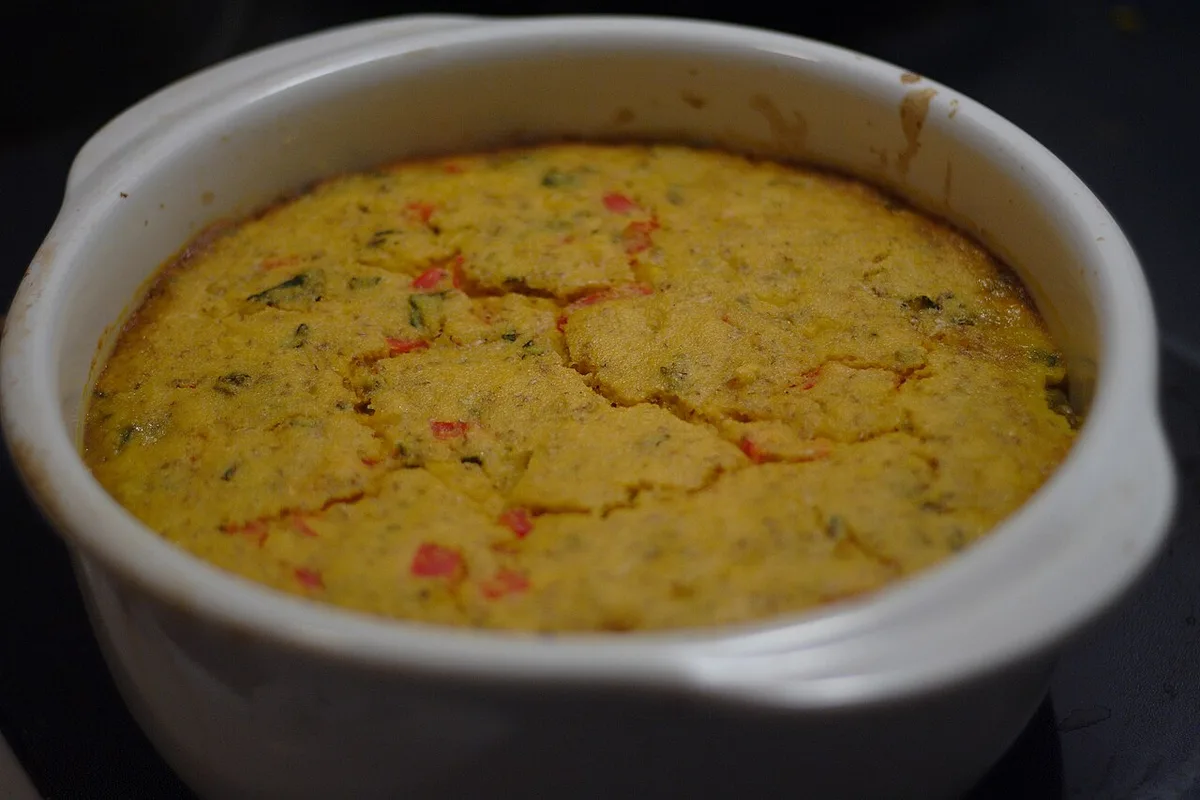
If you're using a shallow silicone mold rather than pouring directly into the basket, the depth of the mold also affects thickness. A deeper mold holds more egg in a smaller footprint, which means more time. Keep the egg layer under about 1 inch (2.5 cm) for the most predictable results.
Fillings and Their Impact on Timing
Fillings do two things to your omelette: they add thermal mass and they release moisture. Both slow down the cook.
Cheese is the most common filling and one of the trickiest. Shredded cheddar or mozzarella melts fast but can burn against the basket if the temperature is too high. Pre-cooked meats like diced ham or crumbled bacon add weight without much moisture, so they extend cook time by about 1 to 2 minutes. Raw vegetables like onions, bell peppers, or mushrooms release water as they heat, which steams the egg from the inside and can leave the center undercooked if you don't account for it.
The practical takeaway: pre-cook any raw vegetables or meats before they go into the omelette. Sauté them quickly in a pan or microwave them for 30 to 60 seconds. This removes excess moisture and ensures everything hits a safe internal temperature. If you're loading the omelette heavy, drop the temperature by 25°F and add 2 to 3 minutes to compensate.
Air Fryer Wattage and Basket Size
Air fryers range from about 1,000 watts to 1,800 watts, and the wattage directly affects how fast the heating element recovers when you open the door or add cold ingredients. A 1,500-watt unit like the Ninja AF161 or the Cosori Pro II will cook an omelette noticeably faster than a compact 1,000-watt model.
Basket size matters too. A smaller basket (around 2 to 3 quarts) concentrates heat in a tight space, which speeds things up but also increases the risk of hot spots. Larger baskets (5 to 6 quarts) spread the same wattage over more area, so the egg mixture may cook a bit slower and less evenly unless the air fryer has a strong convection fan.
If you're using a toaster-oven-style air fryer, expect slightly longer cook times because the interior volume is larger and the heating elements are farther from the food. These units are great for omelettes if you want to use a small oven-safe dish inside, but budget an extra 1 to 2 minutes compared to a compact basket model.
Preheated vs. Cold Start
Preheating your air fryer to the target temperature before adding the omelette makes a real difference. A preheated unit starts cooking the egg immediately. A cold start means the first 1 to 2 minutes go toward heating the air and the basket rather than the food.
For a standard two-egg omelette at 350°F, skipping the preheat adds roughly 1 to 2 minutes to the total time. For thicker or filled omelettes, the gap can be slightly larger because the egg mixture has more mass to bring up to temperature.
Most air fryers preheat in about 2 to 3 minutes. If your model has a preheat function, use it. If not, just let it run empty at your target temperature for 3 minutes before you pour in the eggs. It's a small step that makes the timing more consistent from one cook to the next.
If you're cooking in a smaller space like a campervan or RV where you're already managing power draw, a cold start is fine. Just know to tack on that extra time. Our guide to the best air fryer for campervan travel covers models that heat up fast even on limited power.
Step-by-Step: How to Cook an Omelette in an Air Fryer
Once you know the variables, the process itself is straightforward. Here's the workflow that works across most basket-style and toaster-oven-style air fryers.
Prep the Eggs and Fillings
Crack your eggs into a bowl. One to three large eggs is the sweet spot for a single air fryer omelette. Add a tablespoon of milk or water per two eggs, which helps the omelette stay tender. Season with salt and pepper, then whisk until the mixture is uniform with no streaks of egg white.
Prep your fillings before you start cooking. Shred the cheese, dice the ham, chop the vegetables. If you're using anything raw, sauté or microwave it first. Have everything ready to go because once the eggs hit the hot basket, you'll want to work fast.
Choose the Right Cooking Vessel
You have three main options for cooking an omelette in an air fryer:
- Directly on a lined basket. Use a perforated parchment liner or a light coat of cooking spray on the basket itself. This works best for thin, flat omelettes that you don't need to fold.
- A silicone mold or ramekin. Silicone egg molds designed for air fryers are widely available and make removal easy. A 6-ounce ramekin also works if it fits in your basket with room for air circulation.
- A small oven-safe dish. For toaster-oven-style air fryers, a small ceramic or glass baking dish gives you the most control over shape and thickness.
Whatever you use, make sure it's rated for at least 400°F (204°C). Food-grade silicone is typically safe up to 428°F (220°C) per FDA 21 CFR 177.2600. Grease the vessel lightly with butter or cooking spray to prevent sticking.
Set Your Temperature and Timer
Set the air fryer to 350°F (177°C) as your starting point. This is the middle ground that cooks eggs through without browning the exterior too aggressively. If your omelette is loaded with cheese or sugar-containing fillings (like caramelized onions), drop to 325°F (163°C) to avoid burning.
Set the timer for the low end of the expected range based on your egg count and fillings:
| Omelette Type | Starting Timer | Temperature |
|---|---|---|
| 1 to 2 eggs, plain | 5 minutes | 350°F / 177°C |
| 2 to 3 eggs, plain | 6 minutes | 350°F / 177°C |
| 2 eggs, light fillings | 7 minutes | 350°F / 177°C |
| 3 eggs, heavy fillings | 8 minutes | 325–350°F |
| No preheat | Add 1 to 2 minutes | Same |
Preheat the air fryer for 2 to 3 minutes before adding the omelette if your model allows it.
Check, Adjust, and Finish
When the timer goes off, open the basket and check the omelette. The top should be set and slightly golden. Gently press the center with a silicone spatula or the back of a fork. If it feels firm and springs back, it's done.
If it still feels liquid or jiggly, add 1 to 2 minutes and check again.
Don't overcook. Eggs go from perfectly set to rubbery fast in an air fryer because the circulating air continues to apply heat even after you remove the basket. Pull the omelette when it's just barely set in the center. Residual heat will finish the job in the 30 to 60 seconds it takes to transfer it to a plate.
If you're folding the omelette, slide it onto a plate and fold it in half with a spatula. For omelettes cooked in a mold or ramekin, run a thin knife around the edge and invert onto the plate.
Cook Time Chart by Omelette Type
Here's a consolidated reference you can come back to. These ranges assume a preheated air fryer at the stated temperature using a standard basket-style unit in the 1,400 to 1,700 watt range.
| Omelette Type | Eggs | Fillings | Temp | Time |
|---|---|---|---|---|
| Plain, thin | 2 | None | 350°F / 177°C | 5–7 min |
| Plain, thick | 3 | None | 350°F / 177°C | 7–9 min |
| Cheese only | 2 | 1/4 cup shredded | 350°F / 177°C | 7–9 min |
| Veggie | 2 | 1/3 cup pre-cooked | 350°F / 177°C | 8–10 min |
| Meat and cheese | 3 | 1/4 cup ham, 1/4 cup cheese | 350°F / 177°C | 9–11 min |
| Loaded (meat, veg, cheese) | 3 | 1/2 cup combined | 325°F / 163°C | 10–12 min |
| Egg whites only | 3 whites | None | 350°F / 177°C | 5–6 min |
If you didn't preheat, add 1 to 2 minutes to every row. If your air fryer is on the lower wattage end (1,000 to 1,200 watts), lean toward the higher end of each range.
Egg whites cook faster than whole eggs because they contain less fat and more protein by volume. A three-egg-white omelette sets in about 5 to 6 minutes at 350°F, roughly a minute quicker than a two-whole-egg version. This is worth knowing if you're going for a lower calorie option and don't want to overcook it.
Common Mistakes That Ruin Air Fryer Omelettes
Most air fryer omelette failures come down to the same handful of errors. Here's what goes wrong and how to avoid it.
Skipping the grease. Eggs stick to bare metal and even to some non-stick coatings if they're worn. Always use a light coat of cooking spray, a parchment liner, or a silicone mold. A stuck omelette tears apart when you try to remove it, and you'll spend more time cleaning the basket than cooking.
Overfilling the vessel. Eggs puff up by about 20% during cooking as steam forms inside the protein matrix. If you fill a ramekin or mold to the brim, it overflows into the basket and creates a mess that can smoke against the heating element. Fill no more than two-thirds full.
Using raw fillings. Raw vegetables release water as they cook. That moisture pools around the egg and prevents it from setting properly. Raw meat is a food safety issue. The USDA recommends all ground meats reach 160°F (71°C) and poultry reach 165°F (74°C).
Pre-cook everything before it goes into the omelette.
Setting the temperature too high. 400°F is too hot for most omelettes. The exterior browns and firms before the center has a chance to set, giving you a burnt outside and a runny middle. Stick to 325°F to 350°F for the most even results.
Walking away and trusting the timer. Air fryers vary. A minute or two of difference can be the gap between perfect and rubbery. Set the timer for the low end of the range and check early. You can always add time.
You can't take it back.
Using a paper towel as a liner without securing it. Loose paper towels get picked up by the convection fan and can hit the heating element. If you want a liner, use perforated parchment paper designed for air fryers, or a silicone mat with edges that sit flat against the basket.
How to Tell When Your Omelette Is Actually Done
The most reliable indicator is visual and tactile. A finished air fryer omelette has a uniformly set surface with no visible liquid egg. The edges will pull slightly away from the sides of the mold or basket. The top should be matte, not shiny.
A shiny surface means there's still uncooked moisture on top.
Press the center gently with a silicone spatula. If it feels firm and springs back, it's done. If it leaves an indentation or feels jiggly, give it another minute. The internal temperature should reach 160°F (71°C) per USDA guidelines.
An instant-read thermometer is the most accurate way to confirm, but most home cooks can judge by touch once they've made a few.
Color matters too. You're looking for a light golden surface. Deep browning means the proteins have started to overcook and the texture will turn rubbery. If the top is browning too fast but the center isn't set, drop the temperature by 25°F and add 2 minutes.
One thing to watch for: the omelette will continue to cook from residual heat after you pull it. This carryover cooking raises the internal temperature by about 5°F in the first minute out of the basket. Pull it when it's just barely set. Let it rest on a plate for 30 to 60 seconds before serving.
Air Fryer Omelette vs. Stovetop: Which Is Better?
Neither method is universally better. Each has strengths depending on what you're after.
Stovetop wins on control and texture. A non-stick skillet over medium heat gives you direct control over the cooking surface. You can swirl the eggs, tilt the pan, and fold the omelette in real time. The result is a thin, tender French-style omelette with a barely-set interior that's hard to replicate in an air fryer. Stovetop is also faster for a single thin omelette, typically 2 to 3 minutes start to finish.
Air fryer wins on convenience and hands-off cooking. Once you set the timer, you can walk away. There's no standing over a pan worrying about hot spots or flipping at the right moment. The air fryer also uses less oil. A stovetop omelette typically needs a tablespoon of butter or oil to prevent sticking.
An air fryer omelette needs only a light spray.
Air fryer is better for filled, thick omelettes. The circulating hot air cooks from all sides, which helps set a thick, loaded omelette more evenly than a skillet where only the bottom gets direct heat. If you're making a three-egg omelette stuffed with cheese, ham, and vegetables, the air fryer handles it well.
Stovetop is better for folding. A classic folded omelette requires you to loosen the edges, tilt the pan, and roll the omelette onto a plate. You can't do that in an air fryer. If presentation matters, the skillet is the way to go.
For most weekday breakfasts where you want something hot and protein-rich without babysitting a pan, the air fryer is the practical choice. For a weekend brunch where you want a perfectly folded, silky omelette, the stovetop still has the edge.
If you're cooking in a space without a full kitchen, like a motorhome or travel trailer, the air fryer is the clear winner. It's one appliance that handles the job without needing a stovetop setup. Our roundup of the best air fryer for motorhome use covers models that work well in those tighter setups.
Tips for the Best Air Fryer Omelette Every Time
A few small habits make a big difference in consistency.
Whisk thoroughly. Mix the eggs until the yolks and whites are fully combined with no streaks. Add a tablespoon of milk or water per two eggs. The added liquid creates steam during cooking, which gives the omelette a lighter texture. Some cooks add a small pinch of cornstarch (about 1/4 teaspoon per two eggs) to help the structure hold together, especially for filled versions.
Preheat consistently. Make preheating part of your routine. Run the air fryer at your target temperature for 2 to 3 minutes before adding the omelette. This removes the biggest variable in cook time and gives you more predictable results from one batch to the next.
Use room temperature eggs. Cold eggs straight from the refrigerator take longer to set and can cause uneven cooking. Let them sit on the counter for 10 to 15 minutes before cracking, or warm them in a bowl of tap water for 5 minutes.
Don't open the basket too often. Every time you open it, you lose heat and extend the cook time. Check once at the low end of the timer range. If it needs more time, close the basket and add in 1-minute increments.
Season after cooking, not before. Salt added directly to raw eggs can cause them to weep moisture, leading to a watery omelette. Season the finished omelette instead, or add salt to the fillings rather than the egg mixture.
Clean the basket immediately. Egg residue bonds to the basket surface as it cools. Wipe it out or rinse it as soon as it's cool enough to handle. A clean basket also prevents off-flavors from transferring to whatever you cook next.
If you're batch cooking omelettes for meal prep, let each one cool completely before stacking them in an airtight container. They keep in the refrigerator for up to 3 days and reheat well in the air fryer at 300°F for 2 to 3 minutes.
Safety Notes: Egg Temperature and Material Safety
Eggs are one of the most common sources of foodborne illness when undercooked. Salmonella enteritidis can be present inside intact eggs, and the only reliable way to eliminate it is by cooking to a sufficient temperature. The USDA Food Safety and Inspection Service specifies that eggs should reach an internal temperature of 160°F (71°C) to be considered safe for consumption.
An instant-read thermometer is the best tool for confirming this. Insert it into the center of the omelette at the end of the cook time. If it reads below 160°F, return the omelette to the air fryer for another minute and check again. This is especially important for thick or heavily filled omelettes where the center takes the longest to heat through.
Material safety matters too. Only use cooking vessels rated for the temperatures you're working with. Most air fryer baskets and trays are rated to 400°F (204°C), which covers the 325°F to 350°F range used for omelettes. Silicone molds should be food-grade and rated to at least 428°F (220°C), which is the standard upper limit for food-contact silicone per FDA 21 CFR 177.2600.
Avoid using glass containers unless they're specifically labeled oven-safe. Standard glass can crack under the rapid temperature changes inside an air fryer. If you're using a ramekin or small dish, check the manufacturer's temperature rating before it goes in.
One more thing: never put a sealed or covered container in an air fryer. Pressure can build inside a closed vessel and cause it to crack or pop. If you're covering the omelette to prevent splatter, use a loose sheet of perforated parchment paper, not a tight lid.
Frequently Asked Questions
Can you make an omelette in an air fryer without a silicone mold?
Yes. You can pour the egg mixture directly into a greased air fryer basket lined with perforated parchment paper. The omelette will spread more and come out flat rather than folded, but it works. The cook time is about the same as using a mold.
Just make sure the basket is well greased or the eggs will stick and tear when you try to remove them.
Why does my air fryer omelette come out rubbery?
Overcooking is the most common cause. Egg proteins tighten and squeeze out moisture as they cook past the setting point, which creates that dry, bouncy texture. Pull the omelette when the center is just barely set. Carryover heat will finish the job in the 30 to 60 seconds after you remove it.
Using a lower temperature (325°F instead of 375°F) also helps by giving the egg time to set gently rather than seizing up fast.
Can you reheat an omelette in an air fryer?
Absolutely. Set the air fryer to 300°F (149°C) and heat for 2 to 3 minutes. The result is better than a microwave, which tends to make eggs rubbery. If the omelette is refrigerated, let it sit at room temperature for 5 minutes before reheating for more even results.
Do you need to flip an omelette in the air fryer?
No. The circulating hot air cooks the top and bottom simultaneously, which is one of the advantages over stovetop cooking. Flipping is unnecessary and difficult to do inside a basket-style air fryer anyway. If the top seems to be cooking slower than the bottom, it usually means the temperature is too low or the omelette is too thick.
Raise the temperature by 25°F or reduce the egg count next time.
How many eggs can you use in an air fryer omelette?
Two to three large eggs is the practical limit for a single omelette in most basket-style air fryers. More than that and the omelette becomes too thick for the hot air to penetrate evenly, leaving a raw center and an overcooked exterior. If you need a larger portion, make two separate omelettes rather than one giant one.
Can you use egg substitutes in an air fryer?
Liquid egg substitutes like Egg Beaters work in an air fryer with similar timing to whole eggs. They tend to set a bit faster because they contain added water and stabilizers. Start with the low end of the cook time range and check early. The texture will be slightly different from a whole-egg omelette, but the method is the same.
Is an air fryer omelette healthy?
An air fryer omelette can be a high-protein, relatively low-calorie meal depending on what you put in it. Two large eggs provide about 140 calories and 12 grams of protein. The air fryer itself requires less added fat than a stovetop skillet, which is a small but real advantage if you're watching your intake. The nutritional profile is otherwise the same as any other cooking method.
Final Thoughts
Cooking an omelette in an air fryer is one of those things that sounds odd until you try it, and then it becomes a regular habit. The method isn't going to replace a perfectly folded French omelette from a skilled hand at the stove. For a quick, hands-off breakfast that's consistently good, it's hard to beat.
The key takeaway is that the cook time depends on your specific setup. Egg count, filling type, air fryer wattage, and whether you preheated all shift the clock. Start with the ranges in the chart above, check early, and adjust from there. After two or three attempts, you'll have your own dialed-in time without needing a recipe.
If you're looking for an air fryer that handles eggs and other breakfast foods well, our guide to the best 5 qt air fryer with presets covers models with dedicated egg and breakfast modes that take some of the guesswork out of the process.